ͯÑÕÊÓÆµ

"False"
Skip to content
printicon
Main menu hidden.
Alexandr TalyzinProfessor vid Institutionen för fysikEnhet: Nanomaterials

Nanomaterials and energy storage

Image: simon ohman jonsson inhousebyran

Research group The research of our group is aimed at synthesis of new 2D materials, study of their fundamental properties and energy storage applications. Our interests include synthesis and characterization of graphene-related materials, MXenes fundamental properties of these materials and applications in super capacitors, recycling of rare earth elements, removal of pollutants from waste and for hydrogen storage.

Carbon nanomaterials have been a part of research interest of our group during last 10 years. It started with fullerenes, later included carbon nanotubes and graphene related materials. Currently, active projects include following research directions:
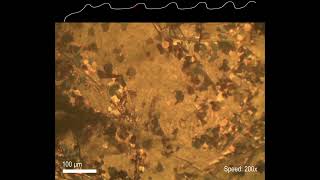
Film: Graphite oxide synthesis
Graphite oxide synthesis

Oscillating electrochemical reaction of graphite oxide synthesis.

  • Synthesis and characterization of porous carbon materials based on graphene and other 2D materials (graphene oxide, MXenes, COFs etc)
  • Applications of porous materials in recovery of Rare Earth metals, Actinides from industrial waste and removal of pollutants from waste solutions.
  • Applications of 2D materials as electrodes in supercapacitors, in situ and operando experiments with supercapacitors using variety of methods (XRD, XRF, Full Field Imaging).
  • Fundamental studies of swelling in 2D materials: graphite oxides, graphene oxide laminates, MXenes. Pressure and temperature dependent experiments.
  •  Using synchrotron radiation method for studies of complex material synthesis reactions: chemical and electrochemical synthesis of graphite oxide and MXenes.

Recent highlights:

Some past projects:

  • Formation of graphene nanoribbons inside carbon nanotubes using fusion of PAHs molecules (coronene and perylene).
  • Hydrogen storage in carbon materials. The group has laboratory for hydrogen sorption measurements with gravimetric and volumetric systems.
  • Hydrogenation of fullerenes and CNTs at extreme conditions. Fragmentation and collapse of fullerenes under conditions of hydrogenation was discovered and studied in our group in 2004-2010. Hydrogenation of fullerenes inside carbon nanotubes was studied in 2009-2012. Annealing in pure hydrogen at temperature sup to 5000C is still a treatment available in our group to modify properties of carbon materials.
  • High pressure studies of phase transitions in variety of materials. Phase transitions in alanates and borohydrates were first discovered in our group.
  • Pressure induced swelling as a phenomenon was discovered in our group in 2008 for graphite oxide, later found in clay minerals (2013).

Head of research

Overview

Participating departments and units at Umeå University

Department of Physics

Research area

Physical sciences

Recent highlights

Analytical Chemistry, Vol. 98, (10) : 7462-7470
Chaudhary, Navneet; Jia, Xueen; Boulanger, Nicolas; et al.
Batteries & Supercaps, Wiley-VCH Verlagsgesellschaft 2026, Vol. 9, (2)
Sruthy, E.S.; Paul, Menestreau; Manavalan, Gopinathan; et al.
Advanced Functional Materials, Wiley-VCH Verlagsgesellschaft 2026, Vol. 36, (1)
Chen, Shiqian; Li, Zheng; Gola, Komal; et al.
Materials Advances, Royal Society of Chemistry 2025, (6) : 3918-3928
Bakhiia, Tamuna; Gurzęda, Bartosz; Li, Gui; et al.
Carbon from forest waste can be used for future energy storage

Pine cones can be a cheap raw material for supercapacitors, according to a new thesis.

Latest update: 2026-05-25